
Saffron for Stress and Anxiety: The Sunshine Spice Explained
Emma JonesShare
Saffron has earned the nickname the Sunshine Spice for good reason. Across centuries of traditional use in Kashmir, Persia, and the Middle East, it has been valued as much for its effect on mood as for its culinary properties. Modern research is now catching up.
What Does the Research Say?
Multiple clinical studies have compared saffron supplementation against placebo and even against prescription antidepressants in cases of mild to moderate depression and anxiety. The results have been consistently positive. Saffron appears to work by inhibiting the reuptake of serotonin in the brain, a similar mechanism to some pharmaceutical antidepressants, though at much lower potency. A 2013 meta-analysis published in the Journal of Integrative Medicine concluded that saffron supplementation had a significant effect on reducing symptoms of depression compared to placebo.
The Role of Crocin and Safranal
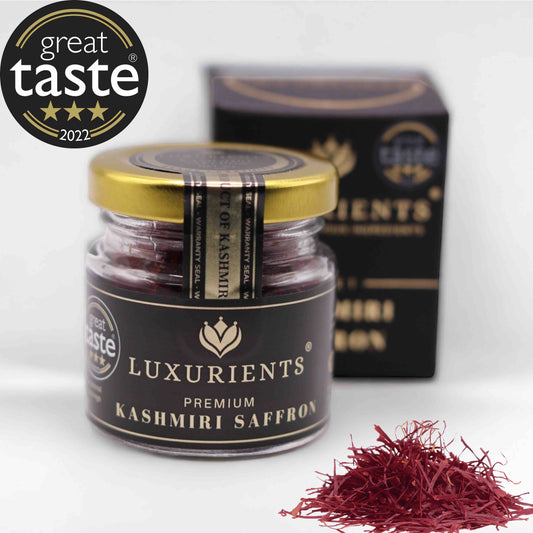
The two compounds most associated with saffron's mood benefits are Crocin and Safranal. Crocin is responsible for the deep red colour and has demonstrated antidepressant properties in multiple studies. Safranal, which gives saffron its distinctive aroma, has shown anxiolytic effects in animal studies. Kashmiri saffron has among the highest concentrations of both compounds of any saffron variety in the world. Luxurients saffron scores 280 on Crocin against a Grade 1 requirement of 200, and 53 on Safranal against a requirement of 50.
How to Use Saffron for Mood Benefits
The simplest method is saffron water. Steep 8 to 10 threads in a small glass of warm water for 10 minutes, then drink. For a richer version, add the threads to warm milk with a small amount of honey. Consumed daily, this is the traditional Kashmiri morning ritual. For best results, use the ice cube extraction method. Lightly grind the threads and place an ice cube on top. As it melts slowly over 2 to 3 hours, it releases the active compounds without heat degradation, preserving the full potency of the Crocin and Safranal.
How Much to Take
Research studies have typically used doses of 30mg of saffron per day, which equates to roughly 10 to 15 threads of high quality Grade 1 saffron. Lower quality saffron requires more threads to reach the same active compound level, which is why grade matters.
Saffron is a food ingredient, not a medication. If you are experiencing serious mental health symptoms, please consult a healthcare professional.
Shop Luxurients Grade 1 Kashmiri Saffron
For a detailed guide on choosing the right saffron for health use, read our guide on how to choose Grade 1 saffron.