
Saffron Health Benefits: What the Science Actually Says
Emma JonesShare
Saffron has been used in traditional medicine for thousands of years across Kashmir, Persia, and the Middle East. In recent years, modern science has begun to validate many of these traditional uses. Here is what the research actually shows.
Saffron for Stress and Anxiety
Several clinical studies have found that saffron supplementation performs significantly better than placebo in reducing symptoms of mild to moderate anxiety and depression. The active compound responsible is thought to be crocin, the same compound that gives saffron its deep red colour. Kashmiri saffron, which has the highest crocin content of any saffron in the world, is therefore considered the most potent for mood-related benefits.
Saffron for Weight Management
Studies have shown that saffron helps reduce appetite by increasing serotonin levels, which reduces compulsive snacking and emotional eating. Adding a few threads to warm water or milk daily is the simplest way to incorporate it into your routine.
Saffron for Skin
Saffron has been used as a natural skincare ingredient across Asian and Middle Eastern traditions for centuries. Its antioxidant properties help fight pigmentation and promote a natural glow. A simple paste made from saffron threads, sandalwood powder, and warm milk applied to the skin is a traditional remedy still used today.
How Much Saffron Should You Use?
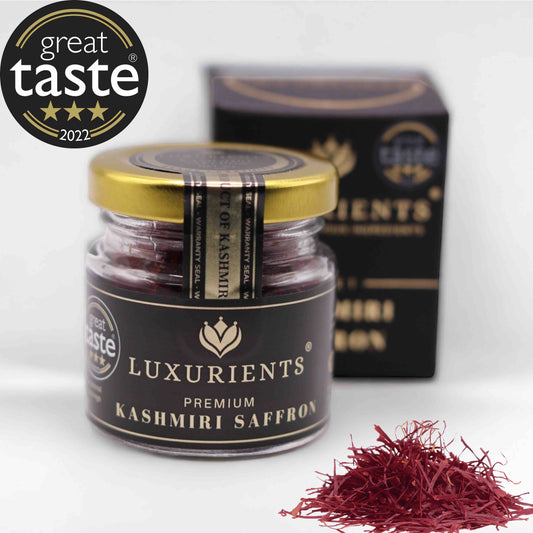
A small pinch of 5 to 10 threads is sufficient for a daily health routine. Using Grade 1 certified saffron like Luxurients ensures you are getting the full potency from every strand.
At Luxurients, our saffron exceeds Grade 1 ISO 3632 standards with a Crocin score of 280 against the requirement of 200, meaning you need less to achieve the same results compared to lower quality alternatives.
Shop Luxurients Grade 1 Kashmiri Saffron
To learn the best way to prepare saffron, read our guide on how to extract saffron using the ice cube method.